
You can usually feel property management accounting slipping before you can prove it. Rent has cleared, a vendor bill is half coded, a tenant deposit is sitting in the wrong place, and month-end reconciliation turns into a scavenger hunt across spreadsheets, bank feeds, and emails. The work looks manageable when a portfolio is small, then suddenly the trust account no longer ties out cleanly and every missing detail feels urgent.
Table of Contents
- Why Property Management Accounting Breaks at Scale
- Setting Up Your Chart of Accounts and Revenue Streams
- Daily and Weekly Bookkeeping Workflows
- Mastering the Three-Way Trust Reconciliation
- Owner Statements, Tenant Ledgers, and Performance KPIs
- Automating Document Capture and Categorization
- Tax Readiness and Compliance Best Practices
Why Property Management Accounting Breaks at Scale
A manager with 18 doors can get away with a lot of improvisation. A manager with 80 doors, multiple owners, and more than one bank account cannot. That's usually when the state audit notice lands, someone asks for a trust balance that doesn't match the ledger, and the team discovers that “close enough” has become a compliance problem.

The reason is simple. Property management accounting is not standard small-business bookkeeping with a different label. It has to track income and expenses by property, manage tenant-level subledgers, separate operating funds from trust funds, and keep owner and tenant money auditable at all times. The industry is also sprawling. U.S. property management revenue was estimated at $136.9 billion in 2026, after growing at a 2.3% CAGR from 2020 to 2025 to $126.3 billion by the end of 2025, with about 335,000 property management businesses and 466,100 professionals in the market, which shows why these workflows have to work across many small and midsize operators, not a handful of giant firms. Source data
The real failure point is control design
The mistake many teams make is thinking the problem is data entry volume. It isn't. The problem is that the accounting process has to prevent errors before they happen, especially when deposits, refunds, owner reserves, and vendor payments all hit the trust account in the same month. When the workflow doesn't isolate those transactions cleanly, one misposted item can ripple through the bank balance, the trust ledger, and each property ledger at once.
Practical rule: if a transaction can be coded later, it usually gets coded wrong under pressure.
That's why a portfolio that looks simple from the outside can still be fragile inside. Every new owner entity, every new bank account, every rent concession, and every security deposit increases the number of places a mismatch can hide. A spreadsheet can record the data, but it can't enforce separation of funds or force a three-way match.
What breaks first
The first break is usually tenant-level accuracy. Someone posts money to the portfolio as a whole instead of to the correct property subledger, and the month-end reconciliation becomes a puzzle instead of a routine check. The second break is timing. Cash is posted after the fact, which means the books stop reflecting the actual position of the trust account.
That's the point where accounting has to be treated as control design, not just bookkeeping. If the workflow doesn't make commingling hard and reconciliation easy, scale will expose the gap fast.
Setting Up Your Chart of Accounts and Revenue Streams
A usable chart of accounts starts with how the portfolio earns and spends money, not with a generic template pulled from a software default. If the accounts don't reflect rent, fees, deposits, reserves, and owner activity separately, monthly reporting turns muddy fast. Owners want to see clean movement, not a single revenue bucket that hides what happened.

Start with the structure, then name the activity
Build the chart around Assets, Liabilities, Revenue, and Expenses, then split each into accounts that mirror the portfolio. Trust cash and operating cash belong in different asset accounts. Security deposits belong in liability accounts, not revenue, because they're held on behalf of tenants and not earned when received.
Revenue accounts should separate the streams you report on. That usually means rent, late fees, pet rent, application fees, and other service charges each getting their own line. Owner contributions and owner reserves deserve separate accounts too, because they affect cash movement and owner statements differently from earned income.
Use numbering that can grow with the portfolio
A block numbering approach keeps the structure readable as the portfolio expands. Think in ranges, not random names. For example, reserve the 1000 range for assets, 2000 for liabilities, 3000 for revenue, and 4000 for expenses, then assign property-level subaccounts underneath those blocks. That makes it easier to compare properties later without rebuilding the whole system.
The best chart of accounts is boring in a good way. Every manager on the team should be able to tell where a transaction belongs without guessing.
Make the owner statement easy to read
Owner draw and owner contribution accounts need clean labels because they show up on statements every month. If those entries are mixed into operating revenue or miscellaneous income, the owner sees a distorted result. A property manager should be able to explain at a glance whether money moved because rent came in, an owner added reserves, or a distribution went out.
A practical setup usually looks like this:
- Rent income accounts for scheduled lease charges
- Fee income accounts for late fees, pet rent, and application fees
- Liability accounts for security deposits and other trust-held funds
- Owner activity accounts for contributions, reserves, and draws
- Expense accounts for maintenance, management, and vendor costs
That structure scales because it separates what the money is, who it belongs to, and how it should appear on reports. Once those distinctions are built into the chart of accounts, the rest of the workflow gets easier instead of harder.
Daily and Weekly Bookkeeping Workflows
The best bookkeeping teams don't wait for month-end to discover what happened. They post cash when it lands, code expenses while the invoice is still fresh, and clear exceptions before they pile up. That habit matters more in property management than in most businesses because every delay creates a reconciliation problem later.

Daily work that keeps the books current
Record rent payments on the day they arrive, even when the payment is partial or tied to a payment plan. Partial rent should be posted to the correct tenant ledger immediately, because waiting until the end of the week makes it harder to see who still owes what. Security deposits should go straight to the trust liability account tied to the right unit or lease file.
Maintenance spending needs the same discipline. If a vendor invoice comes in for one property, code it to that property and the right expense account before payment. If the invoice supports a repair, keep the documentation attached so the transaction can be traced later without hunting through email.
Weekly tasks that prevent month-end chaos
Vendor payments should be reviewed weekly, not bundled up in a panic at the end of the month. That review should confirm the bill is valid, the property coding is correct, and the support file is complete. Returned checks need immediate follow-up because they create both a cash problem and a tenant ledger problem.
Useful habit: if a payment, refund, or transfer changes the trust balance, it shouldn't sit unposted until Friday.
Inter-property transfers and tenant credit balances deserve special attention. Those items can look harmless, but they often reveal whether cash was applied to the wrong ledger or whether a trust account has a hidden mismatch. A manager who clears those items weekly usually has fewer surprises during reconciliation.
A handoff checklist for a bookkeeper or virtual assistant
- Post daily rent activity to the correct tenant and property ledger.
- Match security deposits to the trust liability account the same day.
- Code maintenance invoices by property, vendor, and expense type.
- Flag returned payments and reopen the tenant balance immediately.
- Review inter-property transfers for source, destination, and approval.
- Attach support documents before closing the week.
Daily posting gives you the truth fast. Weekly review keeps the truth clean enough to trust.
Mastering the Three-Way Trust Reconciliation
Trust reconciliation is where property management accounting either proves itself or falls apart. The workflow only works when three records agree, the bank statement balance, the trust ledger balance, and the sum of the individual property or owner ledgers. If one of them is off, the trust account isn't reconciled, even if the other two look fine.
Why all three numbers matter
The bank tells you what cleared. The trust ledger tells you what the management company thinks happened. The individual property ledgers tell you who the money belongs to. When those balances don't match, the issue could be a timing difference, a mispost, a duplicate entry, or a missing owner-level allocation.
That's why a three-way reconciliation is not a clerical exercise. It is the control that proves tenant deposits, owner reserves, and security funds are still intact. The operational pitfall is usually commingling funds or letting tenant-level balances drift out of date, because a mismatch in any one record breaks the whole chain and can expose the manager to trust-account errors.
Deadlines change the level of urgency
State rules can make the timing unforgiving. One practitioner guide notes that California requires reconciliation within 30 days and New York within 15, which is why a manager can't let the month sit open too long. Property management accounting guide
How to investigate a mismatch
Start with the bank statement and confirm the ending cash balance. Then compare that to the trust ledger and look for outstanding checks, deposits in transit, or bank fees that posted directly to the trust account. After that, roll into the property-level ledgers and check whether one owner or tenant balance is out of sync with the cash activity.
A clean investigation usually follows this order:
- Bank statement first, because it shows the external truth.
- Trust ledger second, because it shows whether the internal cash account was updated correctly.
- Owner or tenant ledgers last, because that's where allocation errors tend to hide.
The fastest fix is the one that identifies whether the error is timing, coding, or allocation. Guessing wastes hours.
For a more detailed walkthrough of reconciliation mechanics, the bank-side process is worth comparing with this bank account reconciliation guide. The same discipline applies here, but trust accounting adds the extra burden of proving whose money is where, not just whether the bank balance matches the book balance.
A reliable trust close is repeatable, not dramatic. If the team can explain each reconciling item in plain language and clear it on schedule, the process becomes a monthly control instead of an audit emergency.
Owner Statements, Tenant Ledgers, and Performance KPIs
Owners don't want a pile of transactions. They want a statement that shows what came in, what went out, what stayed in reserve, and what gets distributed. Tenant ledgers serve the other side of that same job, because they answer disputes fast when a resident questions a charge, payment, or balance.
Build statements that read like decisions
A good owner statement separates income, expenses, reserves, and net distributions cleanly enough that a non-accountant can follow it. That means no mystery categories and no blended lines that hide whether cash was retained or paid out. The reporting package gets stronger when every property uses the same chart of accounts, because inconsistent account names make portfolio-level comparisons unreliable.
| KPI | What It Measures | Target Benchmark |
|---|---|---|
| Rent collection rate | How much scheduled rent was collected | Use the full scheduled rent base |
| Maintenance cost per unit | The repair burden at the property level | Compare across similar properties |
| Vacancy loss | Income lost from unoccupied units | Track against the property's own history |
| Net operating income | Operating performance after expenses | Review month over month |
Tenant ledgers should resolve disputes quickly
Tenant ledgers work best when every charge and payment is posted with a clear date, property reference, and support document. If a resident says a payment went missing, the ledger should show whether the issue is a timing delay, a misapplied payment, or an actual arrears balance. That kind of clarity cuts down on back-and-forth and makes collections feel factual instead of argumentative.
Practical insight: the ledger solves most disputes before they reach escalation if the posting habits are consistent.
Reporting should support both owners and operators
Monthly reporting does more than satisfy ownership. It also gives the management team a working view of portfolio health, especially when the same statements are used to spot trends in maintenance pressure, collection behavior, and cash reserves. For operators comparing software and reporting workflows, streamline rental finances can be a useful lens for evaluating how well a system handles recurring property-level reporting.
The close is much easier when statements are generated automatically and reviewed for exceptions, not built from scratch every month. That shift turns reporting from production work into control work, which is where it belongs.
Automating Document Capture and Categorization
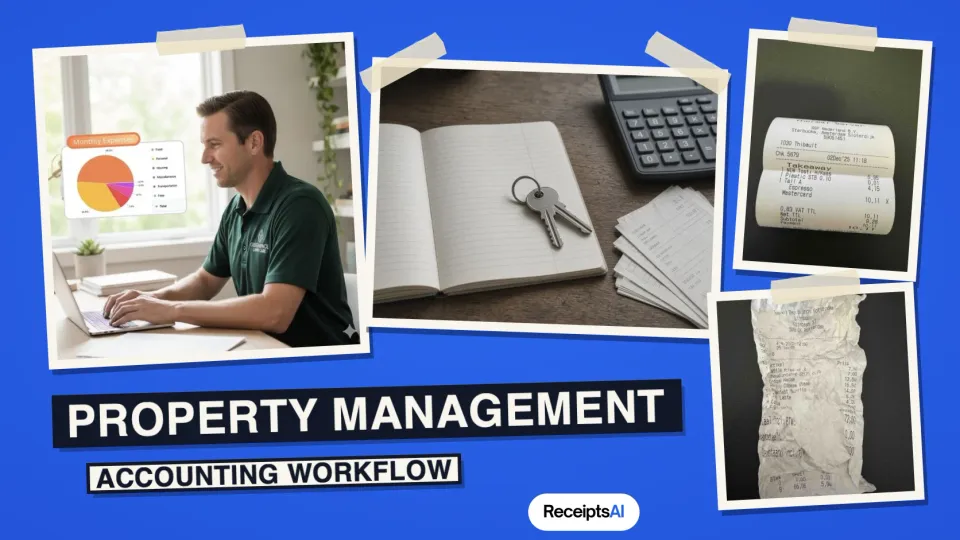
The slow part of property management accounting is rarely the math. It's the paper trail, receipts, invoices, bank statements, and the endless task of making sure each one lands in the right property and account. Manual sorting works until the volume gets high enough that someone starts guessing.
Capture documents at the point of entry
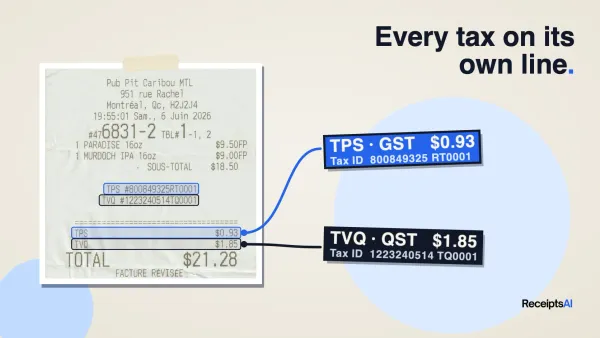
Set up email forwarding so vendor invoices and bank statements flow into one place instead of living in different inboxes. That way the team isn't chasing PDFs after the fact or re-downloading statements when a month closes. Once the documents are centralized, AI extraction can pull merchant names, dates, totals, tax amounts, and line-item details without retyping.
ReceiptsAI is one option for that workflow. It can ingest receipts, invoices, PDFs, spreadsheets, and bank statements, then extract transaction details, apply custom categories, detect duplicates, and keep documents searchable in one archive. That kind of setup is useful when property-level coding has to stay consistent across a large volume of vendor spend.
Use rules to reduce the manual review pile
Automation works best when the rules are specific. If a vendor always bills a certain property, set the categorization rule once and stop rekeying the same decision every month. If a document appears twice, duplicate detection should flag it before it gets paid or posted again.
For more on how document workflows are structured behind the scenes, the overview at what is intelligent document processing is a useful reference point. The core idea is the same here, the system should recognize the document, extract the data, and route it correctly before a bookkeeper has to touch it.
Make catch-up work less painful
Bulk processing matters when the month gets away from the team. A portfolio that falls behind doesn't need more manual entry, it needs a faster way to triage the backlog, sort exceptions, and get the clean items posted immediately. Searchable archives also matter during audits, because the support file for any transaction should be easy to find without digging through shared drives.
If the document can't be found in seconds, it isn't organized well enough for audit season.
Automation doesn't replace review. It removes the repetitive work that causes review to slow down. That's the difference between a close that drags on and a close that finishes on time.
Tax Readiness and Compliance Best Practices
Clean property books do more than make monthly reporting easier. They reduce licensing risk, simplify tax prep, and make it much easier to answer auditor questions without scrambling through old files. That matters because trust-account errors are a leading source of compliance trouble, and sloppy records tend to invite more scrutiny than the underlying transaction ever should have.
Keep the records that tax and audit teams actually need
Vendor files, bank statements, owner statements, trust reconciliations, and security deposit records should all live in a system that can be retrieved quickly. That makes 1099 prep more straightforward and gives auditors a clear trail when they ask how funds moved through the portfolio. For receipt retention standards that affect tax support, this IRS receipt requirements guide is a practical reference.
If you manage across jurisdictions, tax timing can also shift under changing reporting rules. For landlords who need a broader view of timing and filing obligations, Stewart Accounting Services has a helpful overview of landlord self assessment tax changes, which is especially relevant when personal and property records need to stay cleanly separated.

Quarterly checks keep small issues from becoming findings
A solid compliance rhythm includes separate trust accounts, timely trust reconciliations, and proof that security deposits are being handled as liabilities, not revenue. It also means reviewing whether vendor files are complete enough for tax reporting and whether all property records are stored digitally in a way that survives staff turnover.
- Maintain Separate Trust Accounts: keep tenant and owner money segregated from operating cash.
- Issue 1099s for reportable vendor payments: verify vendor records before year-end.
- Follow State-Specific Deposit Rules: security deposits need the right treatment from day one.
- Schedule Quarterly Compliance Reviews: don't wait for tax season to find broken controls.
- Keep Digital Records for 7+ Years: retention should be deliberate, not improvised.
Compliance rule: if a reviewer can't trace the money from bank to ledger to support file, the file isn't finished.
The strongest operators treat bookkeeping as part of the compliance framework, not a task that sits beside it. That approach builds owner trust, makes audits less disruptive, and turns the accounting file into proof that the portfolio is being managed responsibly.
ReceiptsAI helps property teams centralize receipts, invoices, bank statements, and other financial documents, then automate extraction, categorization, duplicate detection, and search across the full archive. If you want a cleaner month-end close and a better audit trail for property management accounting, visit ReceiptsAI and see how its document workflows can fit into your bookkeeping process.