

Month-end still looks the same in a lot of small businesses. Receipts are sitting in email threads, invoices are buried in PDFs, someone is chasing approvals in Slack, and the books don't feel complete until a human being spends late hours stitching everything together. The work gets done, but it depends on memory, heroics, and too many manual checks.
That's where accounting automation software changes the game. Not because it adds one more dashboard, but because it replaces a fragile process with a repeatable one. Instead of waiting until the end of the month to gather documents, enter values, classify transactions, and reconcile accounts, the system handles much of that flow as the work happens.
For owners, bookkeepers, and accountants, the shift is operational. You stop thinking in terms of isolated tasks and start thinking in terms of an end-to-end financial workflow that captures, processes, checks, and stores information with less friction.
Table of Contents
Why Accounting Automation is Reshaping Business in 2026
A familiar problem shows up at the same time every month. The close is approaching, documents are incomplete, someone copied a figure into the wrong field, and now the team is reviewing transactions one line at a time to figure out what went wrong. That kind of accounting isn't just tedious. It's slow, reactive, and hard to scale.
The reason automation matters now isn't hype. It's that businesses are finally treating financial operations as a workflow problem instead of a staffing problem. If every invoice, receipt, approval, and reconciliation step depends on a person remembering the next move, the process will break under volume.
That's why the market shift is worth paying attention to. The accounts payable automation market is valued at USD 6.94 billion in 2026 and is projected to reach USD 12.46 billion by 2031, growing at a 12.44% CAGR, according to DOKKA's AP automation market summary. The same source says 60% of invoices were manually entered in 2024, down from 85% in 2023, which tells you two things at once: manual entry is still common, and businesses are moving away from it quickly.
The pressure isn't only about volume
Owners want current numbers, not stale reports. Bookkeepers want fewer repetitive tasks. Accountants want cleaner support, fewer exceptions, and records that hold up during review. Those needs all point in the same direction.
A broader move toward cloud accounting for professionals also supports this shift because automation works best when documents, approvals, and accounting data aren't trapped in disconnected desktops and inboxes.
Practical rule: If your process depends on downloading files, renaming them manually, and re-entering the same data into multiple systems, you don't have a software problem. You have a workflow design problem.
Why this matters for small teams
Large finance departments can absorb inefficient steps longer than small teams can. A solo owner, a part-time bookkeeper, or a lean accounting staff usually can't. That's why automation has become especially relevant for smaller operations that need speed without adding admin overhead.
If you want a grounded example of how AI is changing everyday bookkeeping tasks, this breakdown on five ways AI is transforming small business bookkeeping is useful because it focuses on practical workflow changes, not buzzwords.
Understanding Core Accounting Automation Concepts
The simplest way to understand accounting automation software is to think of it as a digital assembly line for financial data. Raw documents go in. The software reads them, classifies them, checks them against rules, and turns them into usable accounting records. The value isn't one single feature. It's the handoff from one step to the next without someone manually pushing every item forward.

The digital assembly line idea
In a manual workflow, one person opens an invoice, another enters the header details, someone else codes it, and later a reviewer compares it against payment records or bank activity. Each handoff creates delay and another chance for inconsistency.
Automation compresses those handoffs. A document arrives by upload, email, scan, or sync. The software extracts fields, routes it to the right category or queue, and prepares the data for the accounting system. That's why good automation feels less like a data-entry shortcut and more like process redesign.
A useful mental model looks like this:
| Stage | What enters the system | What the software does | What comes out |
|---|---|---|---|
| Input | Invoices, receipts, statements, PDFs, emailed files | Captures and identifies the document type | Structured financial data |
| Processing | Extracted names, dates, amounts, taxes, vendors | Applies rules, maps fields, checks for exceptions | Classified transactions or review items |
| Output | Approved and processed records | Stores support and syncs to ledgers or reports | Reconciled, searchable, audit-ready records |
What OCR and AI actually do
OCR is the part that reads documents. It turns text inside a receipt, invoice, or statement into machine-readable data. Without OCR, staff still end up typing totals, dates, and vendor names by hand.
AI sits one step further down the line. It helps the system understand context. It can recognize that a charge belongs to a known supplier, that a tax amount should appear in a certain field, or that a transaction looks unusual and should be reviewed instead of auto-posted.
OCR reads the page. AI helps interpret what the page means inside your accounting workflow.
That distinction matters because many tools advertise automation when they really only offer document capture. Capture alone is useful, but it doesn't complete the workflow. If a user still has to rename files, assign categories, validate every field, and export data manually, the process is only partially automated.
The strongest tools usually combine three layers:
Document ingestion: Files arrive from email, mobile upload, shared folders, or bank and app connections.
Decision logic: Rules handle recurring patterns, while AI assists with classification and exception spotting.
Controlled output: Records move into reports, ledgers, or review queues with support attached.
Once you understand those layers, software demos become easier to judge. You stop asking, “Can it scan receipts?” and start asking, “What happens after the scan?”
Key Features of Modern Accounting Automation
A weak product automates one task and leaves the rest untouched. A strong product changes the whole record-to-report flow. That means it doesn't just capture data. It pulls information from financial systems, applies matching rules, prepares entries, routes approvals, and produces records that are usable later during review or audit. HighRadius describes effective automation that way in its overview of automated accounting and record-to-report workflows.

Features that change daily work
The most useful way to evaluate features is to connect each one to a real accounting headache.
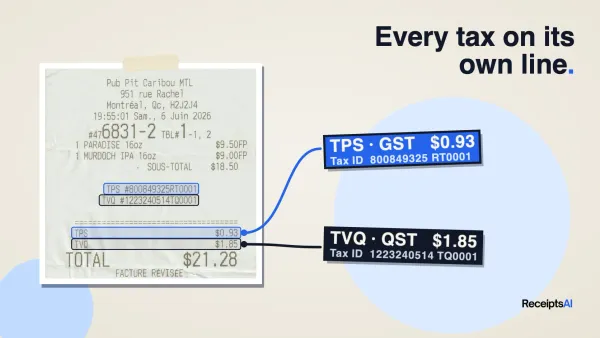
Automated data capture fixes the receipt and invoice pileup. Instead of keying values from PDFs or photos, the system extracts merchant names, dates, totals, tax fields, and other transaction details.
Transaction categorization reduces cleanup later. Good tools learn recurring patterns or use rules so common expenses don't need to be recoded every month.
Approval workflows stop finance work from getting stuck in email. You can route documents to the right person, preserve the approval trail, and avoid verbal sign-offs that disappear later.
Matching and reconciliation support help tie source documents to payments, statement activity, or ledger entries. That's where a lot of month-end friction usually lives.
Searchable document storage matters more than many buyers realize. If support is easy to retrieve, review work gets faster and audit prep becomes far less painful.
If you're building custom workflows outside a full accounting stack, a niche process example like parsing PDF invoices into Airtable shows how document extraction can feed a downstream system. That's useful for operations teams, but it also highlights the difference between isolated automation and true accounting automation software. One moves data. The other manages the accounting process around that data.
What weak tools get wrong
Some products look polished in a demo but create hidden work after implementation. They scan well, but need constant correction. They sync data, but not attachments. They offer rules, but the exception handling is clumsy enough that staff revert to spreadsheets.
I'd watch for these problems early:
Too much confidence, too little control: If the system auto-codes aggressively but makes review difficult, you'll spend more time undoing than saving.
No usable audit trail: If you can't see what changed, who approved it, and which file supports the transaction, the software hasn't solved a real accounting problem.
Rigid workflows: Businesses vary. Retail, hospitality, property, and service firms don't handle source documents the same way. If the product forces one narrow process, adoption suffers.
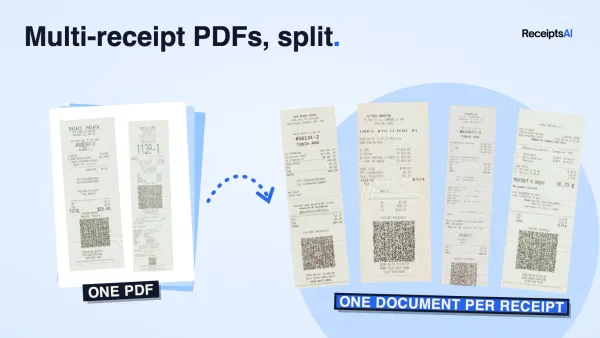
One practical example in this category is ReceiptsAI, which focuses on extracting and categorizing data from receipts, invoices, and bank statements into structured records for bookkeeping workflows. That's useful when the immediate bottleneck is document-heavy intake rather than a full ERP-style implementation.
Buy for the workflow you actually run. Not the workflow the demo assumes you run.
Calculating the ROI of Automated Accounting
Most ROI conversations around accounting automation software go off track because they focus only on labor hours. Time matters, but the full return usually shows up in cleaner books, faster access to information, and fewer mistakes that require rework.
The easiest way to judge ROI is to compare your current process against an automated one across a handful of operational categories. If your team still handles intake, coding, routing, matching, and storage as separate manual tasks, there's probably a meaningful return available even before you model hard numbers internally.

A practical ROI framework
Start with a simple worksheet. Don't overcomplicate it.
Map the manual steps
List every touchpoint from document arrival to final posting or storage. Include chasing missing receipts, renaming files, correcting coding, and answering review questions later.Identify rework hotspots
Look for tasks that happen twice. A receipt gets entered, then corrected. An invoice gets approved verbally, then someone asks for proof later. A statement gets reviewed after data was already posted.Estimate decision delays
Slow bookkeeping has a cost even when it's hard to quantify precisely. If owners are making cash decisions with incomplete numbers, the business is operating with partial visibility.Include audit and compliance friction
Organized support and clean logs reduce stress during tax prep, lender requests, and internal reviews. That's not just convenience. It lowers disruption.
Where the return usually shows up first
In practice, ROI tends to appear first in places that people overlook.
| Area | Manual environment | Automated environment |
|---|---|---|
| Document intake | Files arrive in scattered channels | Files enter through a standard path |
| Coding and review | Staff repeat decisions each cycle | Rules and history reduce repeat work |
| Month-end close | Cleanup piles up at period end | Work gets processed continuously |
| Record retrieval | Support lives in folders and inboxes | Search and linked documents speed review |
A lot of buyers expect dramatic savings on day one. That's usually the wrong expectation. Good implementations produce steadier gains. Fewer missing documents. Less duplicate handling. Better visibility into exceptions. Less cleanup at month-end.
The clearest ROI often comes from work that never has to be done in the first place.
If you want a fair business case, compare software cost against the current cost of delay, correction, and document disorder. That's where the value becomes obvious.
How to Choose the Right Accounting Automation Software
Choosing accounting automation software is less about finding the longest feature list and more about finding the shortest path from incoming documents to reliable books. The right tool should fit your current workflow, reduce manual intervention, and still make sense when your volume or complexity increases.

Questions to ask before you buy
Use your trial period to ask concrete questions, not broad ones.
How does data enter the system?
If your business receives invoices by email, receipts by mobile upload, and statements as PDFs, the software should support those paths without awkward workarounds.What happens after extraction?
Many tools can read a document. Fewer can route it, classify it, attach support, and hand it off cleanly to your accounting process.How well does it integrate with your existing stack?
If you use QuickBooks, Xero, spreadsheets, cloud storage, or approval tools, ask to see the exact sync behavior. Not just the integration logo.Can you control rules and exceptions?
You need both. A rule engine for recurring work and a clear review queue for anything uncertain.What does the audit trail look like?
Open a processed transaction and inspect the full chain. Source file, extracted fields, edits, approval history, and export status should all be easy to follow.
This comparison guide to invoice processing software comparison top 5 tools for 2025 is helpful if invoice-heavy workflows are your biggest pain point, especially when you're trying to separate AP tools from broader bookkeeping automation.
A quick video can also help you spot what a polished workflow looks like in practice:
Red flags during a trial
A short demo rarely reveals operational friction. A live trial does.
Watch for these warning signs:
Users can't tell what the system changed: Hidden automation is dangerous in accounting. Staff need visibility into extracted data, edits, and approvals.
The setup depends on vendor intervention for basic rules: Some support is normal. Constant dependence isn't.
Search is weak: If you can't quickly retrieve a document by vendor, amount, date, or transaction detail, you'll feel that pain every month.
The interface looks simple but review is cumbersome: Clean design is nice. Efficient exception handling matters more.
Test with your messiest real documents, not the vendor's clean sample files.
The best buyer's mindset is skeptical and practical. Bring in edge cases. Duplicate receipts. Crooked scans. Multi-page invoices. Vendor names that appear in different formats. That's how you find out whether the software will hold up after purchase.
Getting Started With Accounting Automation
Implementation fails when teams treat automation like a switch. It works better as a staged rollout with clear rules, cleaner inputs, and a short period where the old and new methods run side by side.
Set up the process before the software
Before changing tools, tighten the workflow itself. Decide where documents should arrive, who reviews exceptions, how categories should be handled, and where final records will live. Software performs better when the process around it is consistent.
A good starting sequence looks like this:
Clean your source material: Remove duplicate files, standardize naming where possible, and separate current-period records from old archives.
Define categories and exceptions: Recurring vendors, reimbursement rules, tax treatment, and approval thresholds should be clarified before automation rules are built.
Assign an owner: One person should manage setup decisions, testing feedback, and change requests.
If receipt intake is part of your bottleneck, this guide on how to automate receipt management for freelancers gives a practical model for standardizing document flow before scaling that process across a larger business.
Roll out in phases
Don't automate everything at once. Start with a contained workflow that creates visible relief.
For many teams, that means beginning with one of these:
Receipt capture and categorization
Vendor invoice intake
Bank statement extraction
Month-end document organization
Then run a parallel period. Let the software process the documents while your existing method remains the control. Compare outputs, note recurring corrections, and refine rules before relying on automation fully.
A phased rollout often looks like this:
| Phase | Focus | What you're checking |
|---|---|---|
| Phase 1 | Intake and extraction | Are fields captured accurately and consistently? |
| Phase 2 | Categorization and rules | Are recurring items handled correctly? |
| Phase 3 | Review and approval flow | Are exceptions routed to the right people? |
| Phase 4 | Full operating use | Can the old manual steps be retired safely? |
The goal isn't instant perfection. It's dependable processing with human review where it matters. Once the team trusts the flow, adoption becomes much easier.
Frequently Asked Questions About Automation Software
Will automation replace the accountant
No. It replaces repetitive handling, not accounting judgment. Software can extract data, apply rules, and flag exceptions, but someone still needs to evaluate unusual transactions, review outputs, manage policy decisions, and interpret the numbers.
In practice, automation tends to improve the accountant's role. Less typing. Less chasing. More review, analysis, and control.
The best accounting teams don't compete with automation. They use it to get out of low-value clerical work.
Is cloud-based automation secure
It can be, if the product is built with serious security controls. You should look for encryption, access controls, permission management, activity logging, and clear handling of stored financial documents.
Security questions should be specific. Ask how data is protected in transit and at rest, who can access client records, whether permissions can be segmented by user role, and how deletion or export is handled.
Do I need an all-in-one platform
Not always. Some businesses need a full accounting platform. Others need a focused automation layer that handles document intake, extraction, categorization, and export into their existing bookkeeping system.
The right answer depends on where the friction lives. If your ledger works fine but source documents are chaotic, a specialized automation tool may be enough. If your problem is broader and includes approvals, reconciliations, and reporting across multiple systems, a more integrated setup may make sense.
What's the biggest mistake buyers make
They buy based on a polished demo instead of a live workflow test. Accounting automation software should be tested with your actual documents, your actual approval logic, and your actual month-end pressures.
How much oversight is still required
Some. And that's healthy. Good automation reduces manual touchpoints, but you still want review checkpoints for exceptions, unusual vendors, policy-sensitive items, and anything that affects compliance or reporting quality.
If your team is buried in receipts, invoices, PDFs, and bank documents, ReceiptsAI is worth a look. It's built for small businesses, accountants, and bookkeeping professionals who want to automate document extraction, categorization, and financial record organization without turning setup into a major IT project.