Keeping a Digital Filing Cabinet in 2026: The Best Receipt Scanning Tools for Small Business

Keeping a Digital Filing Cabinet in 2026: The Best Receipt Scanning Tools for Small Business
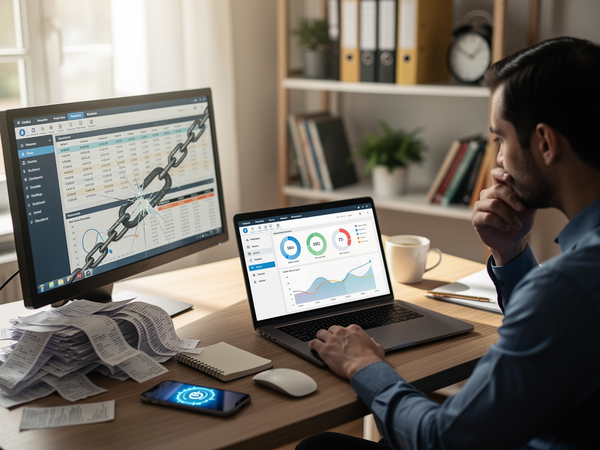
In 2026, a paper receipt is a liability. Thermal paper fades, slips get lost, and manual data entry is a drain on your productivity. For the modern small business owner or freelancer, the digital filing cabinet is a necessity. It is a sophisticated, AI-driven system that ensures every cent is accounted for in real-time.
Managing finances has shifted from a reactive chore to a proactive strategy. The challenge is no longer about finding a place to put paper. It is about choosing the right tools to capture, categorize, and sync data across your entire financial tech stack. This guide explores the receipt scanning landscape of 2026, reviews the best tools available, and outlines how to build a digital filing cabinet that saves time and keeps you audit-ready.
The Shift from Paper to Predictive: Why 2026 is the Year of the Smart Cabinet
By 2026, the technology behind receipt scanning has evolved far beyond basic Optical Character Recognition (OCR). While early tools merely read text, today's leaders use Large Language Models (LLMs) and specialized financial AI to understand context. When you scan a receipt from a hardware store, the system doesn't just see a vendor name and a total. It analyzes your previous transactions, project codes, and industry benchmarks to suggest whether the purchase was a repair expense or a cost of goods sold.
This predictive capability has transformed the digital filing cabinet from a passive storage unit into an active assistant. For small business owners, this means the data entry portion of bookkeeping has effectively dropped to near zero. The focus has shifted to data verification. Integration between scanning tools and banking APIs is now seamless. Most scanning tools offer real-time reconciliation, matching a photo of a receipt to a pending credit card transaction within seconds of the swipe. This level of immediacy is the new standard for fiscal health.
Top-Tier Tools: Reviews of the Industry Leaders
Choosing the right tool depends on your transaction volume, team size, and existing accounting software. Here are the front-runners dominating the market in 2026.
ReceiptsAI: The Complete Digital Filing Cabinet
ReceiptsAI stands out as the premier choice for small businesses looking to build a comprehensive digital filing cabinet in 2026. With its AI-powered receipt scanner delivering 99% OCR accuracy, it extracts merchant names, addresses, dates, amounts, tax information, and transaction descriptions from JPEG, PNG, HEIC, PDF, TIFF, and WEBP formats instantly. What truly sets ReceiptsAI apart is its holistic approach: beyond receipt scanning, it offers bank statement categorization, invoice processing, and automated expense categorization with up to 100 custom categories. The platform's duplicate detection prevents double-entry errors, while natural language search lets you find any document instantly. With pricing starting at free (30 credits) and affordable plans at $12/month for 100 pages, ReceiptsAI combines enterprise-grade features with small-business-friendly pricing. Its seamless integration with QuickBooks, Xero, Sage, and cloud storage services makes it the foundation of a truly paperless office.
Dext Prepare
Dext remains a strong contender for accuracy. In 2026, its Precision Engine is nearly 99.9% accurate, even when dealing with crumpled or faded receipts. Dext is particularly valuable for businesses with high transaction volumes or those working with an external bookkeeper. The Direct Fetch feature automatically logs into your utility providers, Amazon Business account, and software subscriptions to pull invoices without manual effort. It also handles bank statement extraction for easier reconciliation.
Expensify: The Evolution of Spend Management
Expensify has moved beyond simple scanning to become a comprehensive spend management platform. For freelancers and small teams who travel, the mobile app is the best in its class. In 2026, its Concierge AI handles multi-currency conversions and per-diem calculations automatically. It also includes a Real-Time Audit tool that flags receipts that do not comply with tax laws or company policy before you submit them. For those using the Expensify Card, reconciliation is instantaneous.
Zoho Expense
For businesses already using the Zoho ecosystem, Zoho Expense offers a cost-effective, integrated solution. The 2026 update includes Auto-Categorization 2.0, which uses machine learning to map expenses to your specific Chart of Accounts. It is strong for tracking billable expenses back to specific clients or projects, with robust mileage tracking that integrates directly with expense logs.
Hubdoc
As a Xero-owned product, Hubdoc is the primary choice for Xero users. It excels in simplicity, focusing on being the most efficient inbox for your financial documents. The folder-based organization system mimics an old-school filing cabinet but adds full-text search. Its ability to automatically fetch recurring bills from online portals makes it reliable for maintaining a clean audit trail.
Beyond the App: High-Volume Hardware for Growing Teams
Smartphone apps are the primary interface for receipt scanning, but hardware still plays a role for businesses handling physical paperwork, such as retail, construction, or legal services. In 2026, the desktop scanner has been reimagined for the cloud.
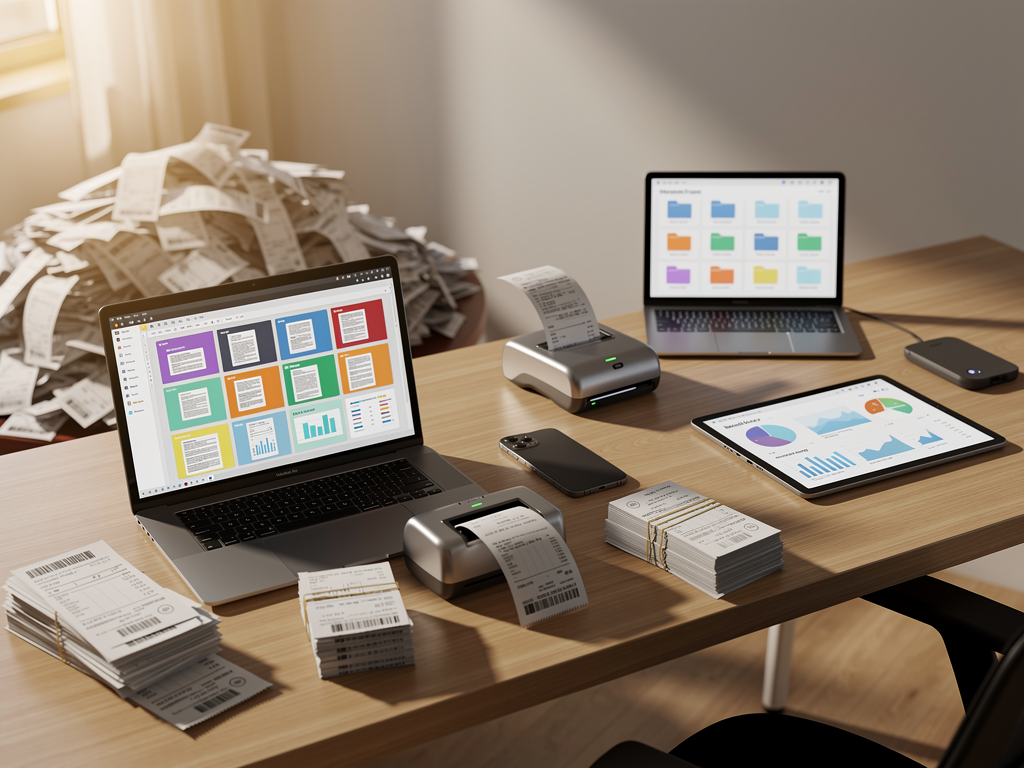
The Fujitsu ScanSnap iX1600 is the industry workhorse. It is a standalone Wi-Fi device that functions without a computer. You can stack 50 mixed-size receipts into the feeder, press one button on the touchscreen, and the device scans both sides, cleans the images, and sends them directly to your cloud-based filing cabinet. This hardware is essential for offices that still receive a high volume of physical mail or invoices.
For the mobile professional, the tool of choice is a smartphone equipped with LiDAR (Light Detection and Ranging). In 2026, high-end mobile devices use LiDAR to create 3D maps of documents. This ensures every scan is perfectly flat and legible, regardless of poor lighting or curved paper. When combined with a scanning cradle or stand, your phone becomes a high-speed document digitizer that rivals expensive office equipment. The goal is to eliminate the pile-up by scanning documents the moment they arrive.
Navigating the Legal Landscape: Security and Compliance in 2026
A common hurdle for small business owners is the fear of an audit. In 2026, digital copies are recognized as primary evidence by most tax authorities, including the IRS and HMRC, provided they are legible and unalterable.
This makes your choice of tool a matter of security. A digital filing cabinet should never be just a folder of JPEGs on a hard drive. Professional tools provide an Audit Trail or Chain of Custody. The software records exactly when the receipt was scanned, who scanned it, and any metadata associated with the original file. This level of detail is what satisfies an auditor.
Data sovereignty and privacy are also critical. Ensure your chosen tool uses end-to-end encryption and offers Multi-Factor Authentication (MFA). You are storing sensitive financial data: your digital cabinet must be as secure as your bank account. Look for tools that are SOC 2 Type II compliant. This ensures the provider follows the highest industry standards for data protection and privacy.
Building the Zero-Touch Workflow: Integration is Everything
The value of a digital filing cabinet is realized when it communicates with the rest of your business. A Zero-Touch workflow is one where information flows from the point of purchase to your financial reports without manual intervention.
A 2026 best-practice workflow follows these steps:
- Capture: Pay for a business expense. If it is a physical receipt, snap a photo immediately via your app. If it is an email invoice, forward it to a dedicated inbox email address provided by your scanning tool.
- Extract: The AI extracts the vendor, date, total, tax amount, and payment method.
- Categorize: The tool recognizes the vendor and assigns the expense to the correct category based on your history.
- Sync: The tool pushes the data and the image to your accounting software, such as QuickBooks or Xero.
- Archive: The digital image is stored in your searchable cloud cabinet, while the data is reconciled against your bank feed.
By the time you perform your monthly review, most of the work is finished. You are simply checking the AI's work for anomalies. This workflow provides immediate financial visibility. You can see your exact spend on subscriptions or travel at any time, rather than waiting for quarterly reports.
Maintenance Habits: Keeping Your Digital Cabinet Organized
Even the best AI tools require human oversight. To keep your digital filing cabinet useful, implement a few digital hygiene habits.
Adopt a "Search, Don't Sort" philosophy. In the past, business owners spent hours creating nested folders. In 2026, AI-powered search makes this obsolete. As long as your receipts have the correct metadata (Vendor, Date, Category), you can find them instantly. Focus your energy on verifying tags rather than building complex folder structures.
Perform a Monthly Reconciliation Sweep. Spend 15 minutes at the end of each month looking for unmatched items in your scanning tool. This usually happens when a receipt was paid in cash or from a personal account, meaning the software could not find a corresponding bank transaction. Addressing these small gaps monthly prevents a massive workload at year-end.
Manage your Data Retention. While storage is cheap, keeping decades of receipts can clutter your search results. In 2026, most tools allow you to set Retention Rules that automatically archive or purge documents that have passed the legal requirement, which is usually seven years. This keeps your active database lean and efficient.
Conclusion: The Freedom of the Paperless Office
Keeping a digital filing cabinet in 2026 is a fundamental requirement for any small business that wants to remain competitive. By leveraging AI-driven tools like ReceiptsAI, Dext, or Expensify, investing in quality scanning habits, and ensuring your workflow is fully integrated, you reclaim your most valuable asset: your time.
For most small businesses, ReceiptsAI offers the ideal balance of powerful features, ease of use, and affordability. Its comprehensive approach to receipt management, bank statement processing, and expense categorization eliminates the need for multiple tools, streamlining your entire financial workflow into one intelligent platform.
The transition from a physical shoebox to a digital ecosystem may feel like a significant shift, but the rewards are immediate. The days of lost deductions, faded ink, and the stress of tax season are over. Instead, you gain a clear, real-time view of your business's financial health. Choose one tool, scan your first receipt, and move toward a paperless, efficient financial future. Your business deserves a system that works as hard as you do.